September 16, 2026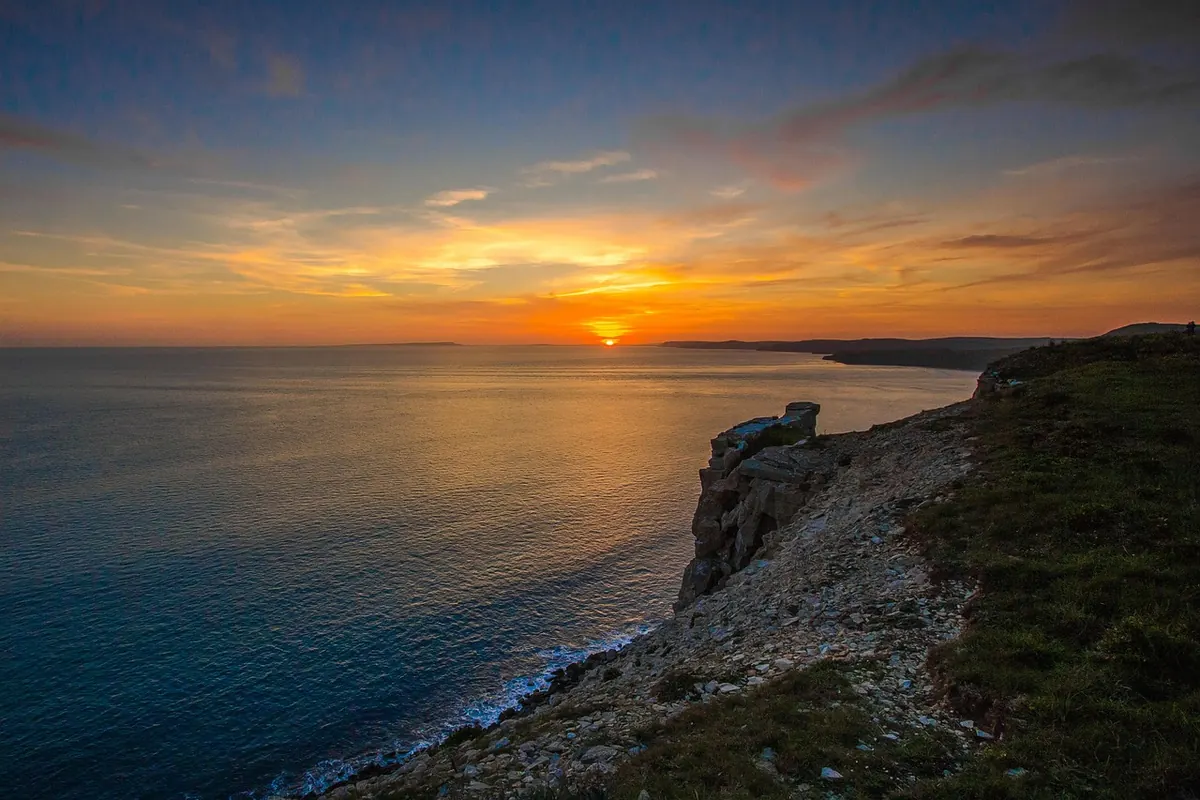
The Jurassic Coast is a geological time machine disguised as a seaside. It runs for roughly 95 miles from Orcombe Point, near Exmouth, to Old Harry Rocks, near Swanage, and it is England's first natural World Heritage Site. The name is slightly misleading: the rocks here span the Triassic, Jurassic and Cretaceous periods. Walk west to east and you move forward in time, from red desert sandstones to dark fossil-rich shales, then to bright chalk. You do not need a geology degree to enjoy it. You need decent shoes, a tide table, and the habit of looking at the cliffs as well as the sea.
A Timeline You Can Walk
The story begins with the oldest rocks in the west. Around Exmouth, dull red sandstones and mudstones were laid down in Triassic deserts and river plains. Move east to Lyme Regis and Charmouth and you meet the Jurassic: dark grey and blue-black shales and limestones packed with marine fossils. Continue past Weymouth into Purbeck and you find limestones, clays and shales deposited in shallow lagoons and seas. Finally, at Old Harry Rocks, the cliffs are Cretaceous chalk, made from the shells of tiny marine organisms.
Why does the coast change so dramatically? The rocks were deposited at different times, then tilted, folded and faulted. The sea has since eroded them at different rates. Hard limestone and chalk tend to form headlands, cliffs and arches. Soft clays and shales erode into bays, landslides and muddy beaches. Once you notice that contrast, the coastline starts to make sense.
Lyme Regis and Charmouth: Mud, Shale and Fossil Beds
Lyme Regis is the classic starting point. The cliffs here are made of Blue Lias and Charmouth Mudstone: thin bands of grey limestone alternating with darker shale. This is marine rock, laid down in a warm, shallow sea during the Early Jurassic. It is also fossil heaven. Ammonites, belemnites, bivalves and occasional marine reptile bones wash out of the clay, especially after storms and winter landslides.
On Monmouth Beach, west of the Cobb, you can see large ammonites embedded in limestone ledges. At Charmouth, the beach below Black Ven is famous for loose fossils. Look along the tide line and among shingle, not at the base of the cliffs. A hand lens helps you spot small belemnites and crinoid fragments. Mary Anning's discoveries of ichthyosaurs and plesiosaurs came from these same cliffs, which shows how much can still be found by patient beachcombing.
Safety first: the cliffs are unstable. Never hammer into them, never stand directly below them, and check tide times before you walk. Mudflows can be deep and slippery.
Bridport to Portland: Sands, Shingle and Limestone
East of Charmouth, the geology shifts. Around Bridport and Burton Bradstock, you meet Middle Jurassic sandstones and the Inferior Oolite, a golden-brown limestone full of shell fragments. The cliffs are lower and the beaches sandier, but the rock is still rich in fossils: brachiopods, bivalves and occasional ammonites.
Then comes Chesil Beach, a long shingle barrier that runs towards Portland. It is a striking landform, built by waves and currents moving pebbles along the shore. Portland itself is a block of hard Portland Limestone, quarried for centuries and used in buildings far beyond Dorset. At Portland Bill, the white limestone is cut by vertical joints. Look for fossil shells, ripple marks and the way the sea exploits cracks to shape the cliffs.
Lulworth, Purbeck and the Folded Coast
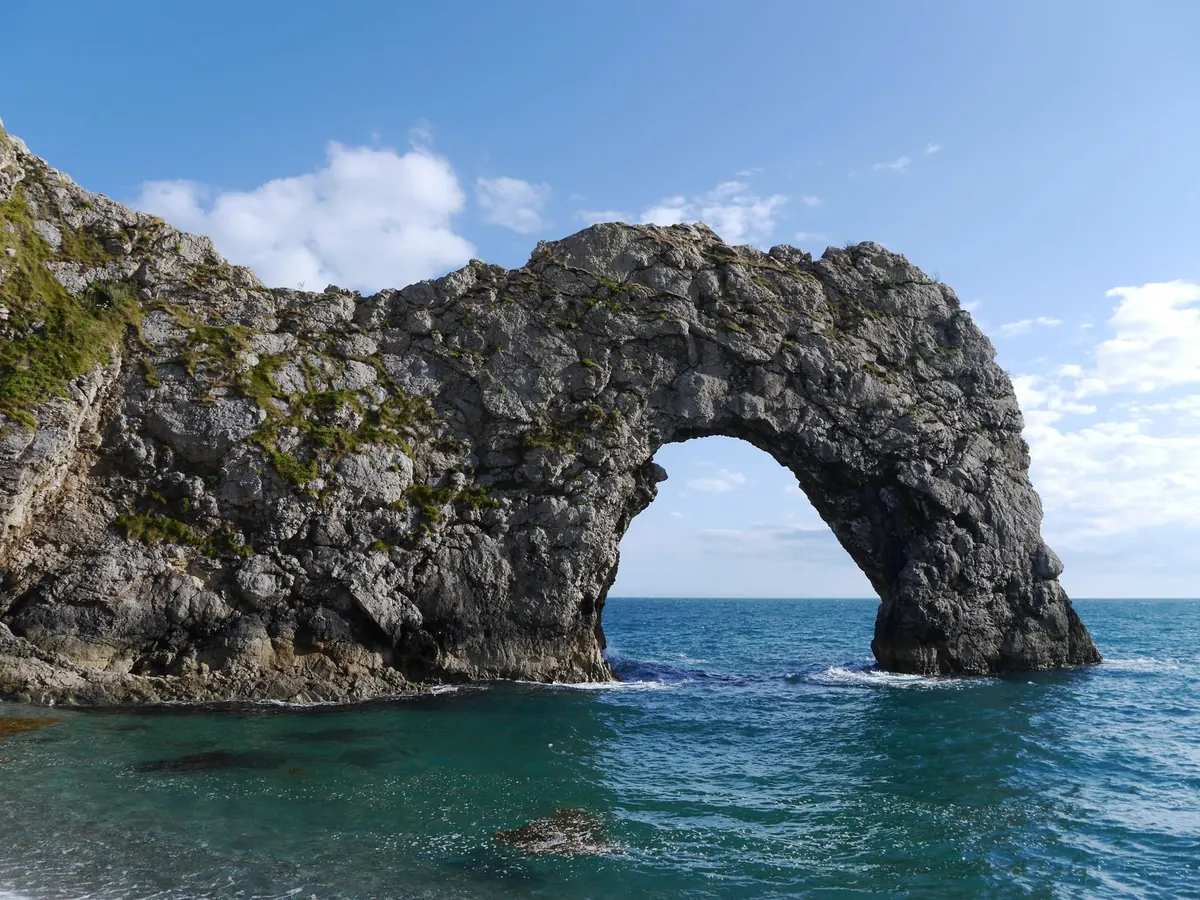
The stretch between Weymouth and Swanage is the most dramatic. Here the rocks have been compressed into a huge fold called the Purbeck Monocline. At Stair Hole, near Lulworth, you can see folded limestone layers like crumpled paper. At Lulworth Cove, the sea has breached the hard outer limestone and eroded the softer clays behind, creating a near-circular bay. A short walk west brings you to Durdle Door, a natural limestone arch formed where the sea eroded a weakness in the rock.
Further east, Kimmeridge Bay exposes dark Kimmeridge Clay, a Jurassic mudstone that is rich in organic matter and fossils. The ledges are slippery, but the bay is a wonderful place to see bedding planes, septarian nodules and ammonites. Worbarrow Bay and Mupe Bay show more of the same mix: hard limestone caps, soft clays below, and landslides that keep the coast raw and changing.
Old Harry Rocks and the Chalk
At the eastern end of the Jurassic Coast, the rocks jump forward in time. Old Harry Rocks are sea stacks and stumps of Cretaceous chalk, much younger than the Jurassic shales at Lyme Regis. Chalk is made of microscopic marine plankton and is surprisingly soft, but it is strong when thick and dry. The sea erodes it along joints and faults, cutting caves, arches and eventually stacks.
From Handfast Point, you can see the chalk cliffs running towards Swanage. Look for bands of flint, a hard silica nodule that remains after the chalk wears away. The chalk here links directly to the Needles on the Isle of Wight and to the white cliffs of Dover, all part
Photo: diego_torres / Pixabay